


HID Ballast
Company Profile
BERSN is innovative electronics designer and manufacturer of smart lighting technology, supporting its customers with intelligent hardware and software and offering the highest level of quality, reliability and energy savings.
Working on the market of smart lighting solutions for almost 20 years, BERSN grows to become an industry recognized developer and most progressive company with head office in Shenzhen, China, developing innovative, turn-key, fully integrated smart lighting solutions for Smart City.
Why choose us?
Quality assurance
We have 100% quality guarantee to customers. We will be responsible for any quality problem.
Good service
Good after-sale service, handling the customer complaint and solve problem for customers.
Reasonable price
Our products are complete in variety, good in quality, reasonable in price.
Fast delivery
Complete packaging to ensure products quality, and transport to the destination in the first time.


What is HID Ballast
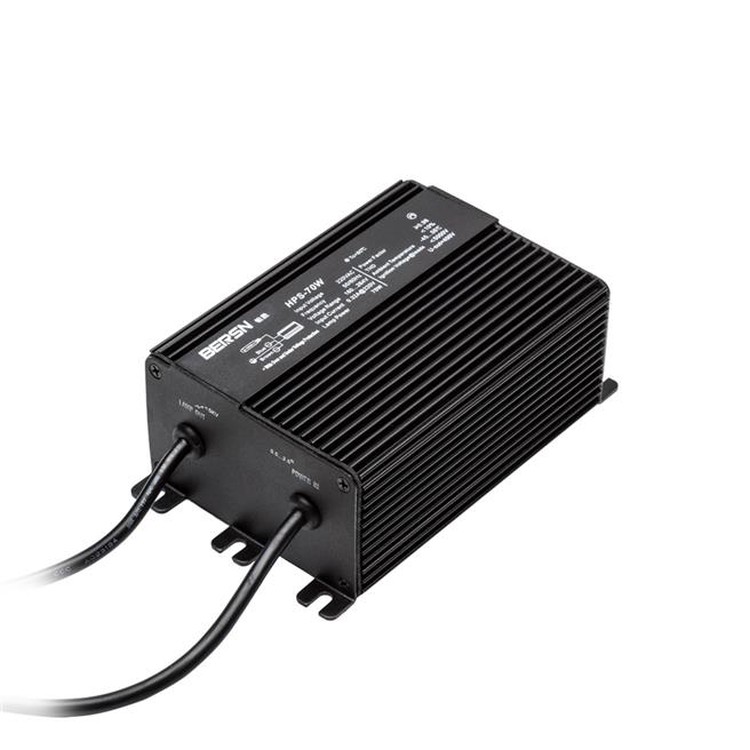
An HID ballast is a device that sends voltage to light up a fluorescent lamp. It also regulates the light’s current as soon as the lamp is active.
However, problems can arise without a ballast. For example, the lamp could pull in excessive power, overheat, and ultimately burn out rather quickly. Not only does a ballast allow the lamp to function efficiently, but it also provides longevity.
Quick start-up
A ballast quickly turns on a lamp and supplies it with greater voltage, causing an arc to form between two electrodes. This causes the HID bulbs to illuminate.
Maintains performance
Additionally, a ballast maintains the lamp’s performance by keeping it stable and operable. The ballast lessens the voltage once the arc forms while regulating the current. This means the light is stable and balanced. It also won’t experience flickering or fading.
Energy efficient
HID Ballasts can consume up to 25% less energy compared to conventional ballasts.
Longer life
These typically last longer than traditional ballasts.
Versatile
Due to the smaller size and decreased costs, HID ballasts have different applications. That’s because manufacturers are creating ballasts that handle higher voltages.
Are There Different Types of HID Ballasts
There are different types of HID ballasts, although all of them perform the same basic function of supplying and mediating voltage and current.
The majority of modern HID ballasts are electronic. Electronic ballasts use a circuit to help regulate the voltage and current supplied to the bulb. Sometimes, electronic ballasts contain modern safety features, such as short circuit protection as well as under or over-voltage protection.
Some modern HID ballasts are digital ballasts. Digital ballasts draw very little energy and are very efficient. Digital ballasts may also provide special controls over temperature and brightness, which can optimize the operation of the HID light for longer life.
While most modern HID bulbs work in conjunction with electronic or digital ballasts, traditionally, HID ballasts have belonged to a class known as magnetic ballasts. Magnetic ballasts contain a series of internal components that regular voltage and current including a capacitor which stores charge.
Some ballasts are considered probe-start ballasts, in which a separate probe electrode is used to start the lamp. The probe electrode supplies the initial arc and is then removed from the circuit when the lamp reaches full brightness. These ballasts are somewhat slower and it takes a longer time for the lamp to warm up and reach full brightness.
Another type of ballast is called a pulse-start ballast, which instead of a starting probe use an igniter which pulses alongside the ballast to start the lamp. These ballasts are easier on the lamp while also being more efficient at startup. They reach full brightness more quickly and since they are more efficient, lamps using them tend to last longer.
(There is another type of HID ballast known as a CANbus system that is sometimes used with cars that have HID headlights installed. CANbus, which stands for “controller area network” allows different components to communicate with each other without the need for a central controller, which allows the system to notify the operator if there is an issue with the light or system.)
Application of HID Ballast
Automotive
In the automotive sector, HID ballasts regulate voltage and current for high-intensity discharge headlights, enhancing visibility and safety. The market trend sees continued demand for HID ballasts due to their role in providing premium lighting solutions in vehicles.
Residential
HID ballasts cater to residential lighting needs by regulating current and voltage for efficient high-intensity discharge lamps. While there’s a shift towards LED lighting, HID ballasts find relevance in specialty and outdoor applications.
Commercial
HID ballasts ensure optimal performance of high-intensity discharge lighting in commercial spaces, such as offices and retail stores. Although LED adoption is rising, HID ballasts remain crucial in applications requiring powerful illumination.
Industrial
Industries utilize HID ballasts to achieve high-intensity lighting in manufacturing facilities and warehouses. Energy efficiency and cost-effectiveness continue to drive demand for HID ballasts, despite the growth of LED alternatives.
Outdoor
HID ballasts are pivotal in outdoor lighting, including street lighting, sports arenas, and public spaces. They provide high-intensity illumination and contribute to safety. While LEDs gain popularity, HID ballasts remain vital in applications requiring robust outdoor lighting solutions.
How to Install a HID Ballast
Preparations
There are three basic parts inside the ballast: the transformer, the capacitor and the ignitor. Each of these parts can be bought separately. When purchasing individually, make sure to buy the correct rating for the home, usually 120V in most homes. In addition to these three, the HID ballast should also be wired to a bulb and socket; therefore, there is a need for a 14 gauge wire, wire nuts, power cord and male plug set. Also, obtain a wiring diagram for the ballast. This usually comes in the manual or written on the ballast enclosure.
Wiring the internal parts
The wiring diagram shows three components connected to the lamp (the transformer, the capacitor and the ignitor). Inspect the two sides on the transformer to see its long side and the short side. Notice that wires come out of the device through two protuberances.
The capacitor has two wires and the ignitor has three wires (X1, X2 and X3). Keep in mind that the description on the wires is important when connecting them.
Locate the wire on the transformer with the word cap. Connect this wire to the capacitor and secure the connection with a wire nut. On the long side of the transformer, locate the wire marked X3 or 3. Connect this wire to the ignitor wire marked X3 or 3 as well. Be certain no bare wire is exposed.
Connecting the ballast to the socket and lamp
To connect the ballast to the socket, get the white wire from the socket, locate the com2 or comX2 on both the short side of the transformer and the igniter and connect the 3 all together using a wire nut.
How to install a HID ballast? Locate the wire labeled lamp on the long side of the transformer and the X1 wire on the ignitor. Connect both of these together with the black wire coming from the socket. Connect all three using a wire nut.
Final connections
There should be two wires coming out of the HID ballast’s short side labeled com and 120. Remove the sheathing from the power cord, and strip the insulation on both black and white wires about ½-inch. Connect the com wire to the white wire on the power cord and the 120 wire to the black wire. Make sure all connections are secured using wire nuts. Afterwards, connect the bare wire to the base of the transformer or to the enclosure. Install the enclosure to cover the magnetic ballast and tighten the screws.
How to install a HID ballast testing
Check to make sure that all connections are correct and complete. Install a bulb onto the socket and plug the ballast to a power supply. If the light works, the wiring is successful.
HID Ballast Market – Significant Growth Factors
The HID Ballast Market presents significant growth opportunities due to several factors:
Energy efficiency demands: The growing emphasis on energy efficiency and reduced operational costs is driving demand for HID ballasts. These components help optimize energy consumption in lighting systems, making them attractive to industries and businesses seeking sustainable lighting solutions.
Industrial and infrastructure development: The expansion of industries, infrastructure projects, and urbanization fuels the demand for HID lighting solutions. HID ballasts are essential for high-intensity illumination in warehouses, factories, street lighting, and sports facilities.
Automotive lighting innovations: The automotive sector’s continuous innovation in lighting technology, particularly HID headlamps, boosts demand for HID ballasts. These components ensure optimal performance and efficiency in high-intensity discharge automotive lighting systems.
Retrofitting and upgrades: Retrofitting existing lighting systems with HID technology and electronic ballasts is a cost-effective way to improve lighting quality and energy efficiency. This trend contributes to the demand for HID ballasts in commercial, industrial, and outdoor applications.
Transition to smart lighting: The integration of HID lighting systems with smart controls offers opportunities for enhanced user experience and energy optimization. As businesses and municipalities adopt smart lighting solutions, the demand for HID ballasts compatible with these systems is expected to rise.
Rising demand for specialty applications: HID lighting remains preferred in specialty applications such as horticulture, aquariums, and film production due to its unique spectral properties. The ability of HID ballasts to cater to these niche applications presents growth opportunities in markets that require precise lighting solutions.
Regulatory compliance and energy standards: Increasing government regulations and energy efficiency standards drive the adoption of efficient lighting solutions. HID ballasts that meet or exceed these regulations become essential for businesses to comply with energy-saving initiatives, creating a demand for upgraded lighting systems.
Outdoor and recreational activities: The demand for HID lighting in outdoor and recreational spaces such as sports stadiums, amusement parks, and outdoor events drives the market. HID lamps with appropriate ballasts provide high-intensity illumination, contributing to enhanced safety and visibility during nighttime activities, thereby boosting the demand for HID ballasts.
How to Choose the Right HID Ballast
Lamp compatibility
Ensure that the ballast is compatible with the specific type and wattage of HID lamp you intend to use. Different lamps require different operating voltages and currents, so it's crucial to match them correctly.
Ballast type
There are two main types of HID ballasts - magnetic (inductive) and electronic (solid-state). Magnetic ballasts tend to be less efficient but are generally more affordable. Electronic ballasts offer higher efficiency, dimming capabilities, and reduced noise but come at a higher cost.
Efficiency
Look for a high-efficiency ballast that minimizes energy consumption while providing optimal performance for your intended application.
Dimming capability
If you require the ability to dim your HID lamps for certain lighting applications or scenarios, choose a ballast specifically designed for dimming functionality.
Thermal protection
Consider whether the ballast has built-in thermal protection features that help prevent overheating by automatically shutting down if temperatures exceed safe levels.
Reliability and durability
Opt for a reputable brand known for manufacturing reliable and durable HID ballasts that will last over time without frequent failures or malfunctions.
Size and mounting options
Ensure that the physical dimensions of the chosen ballast fit within your fixture or installation space requirements properly. Also, consider if it offers various mounting options suitable for your specific setup needs.
Cost
Compare prices across different brands/models while considering factors like warranty coverage/length as well as long-term operational costs associated with energy efficiency when determining value-for-money aspects.
Certifications


Our Factory
Working on the market of smart lighting solutions for almost 20 years, BERSN grows to become an industry recognized developer and most progressive company with head office in Shenzhen, China, developing innovative, turn-key, fully integrated smart lighting solutions for Smart City.


FAQ